When AI Writes the Code, Who Learns to Think?
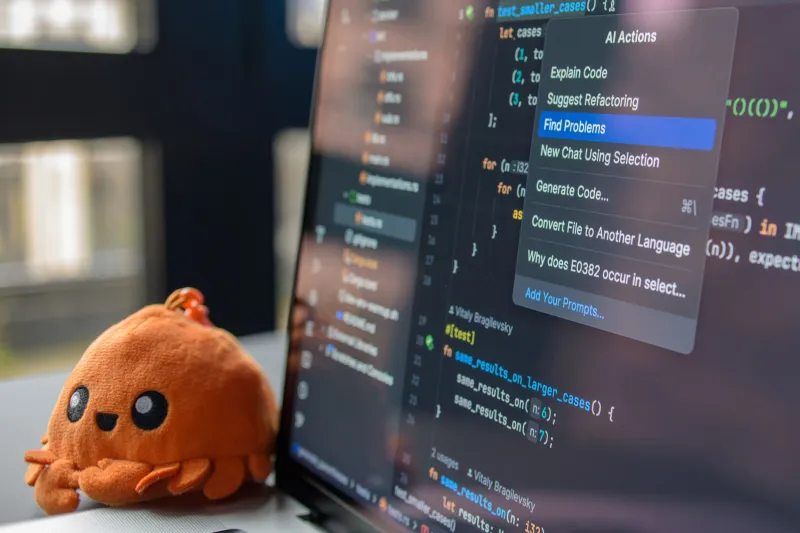
Let's start with something that might ruffle a few feathers: the rise of AI code assistants is one of the best things to happen to experienced developers and one of the most dangerous things to happen to junior ones.
That's not a knock on the tools. Copilot, ChatGPT, Cursor, and their growing list of competitors are genuinely impressive. They save experienced engineers hours of boilerplate work and help senior devs stay in flow. But there's a growing problem hiding inside all that productivity — and it's showing up in code reviews, technical interviews, and day-to-day debugging sessions across the industry.
Juniors aren't learning to code. They're learning to prompt.
The Shortcut That Feels Like Learning
Here's the trap. When a junior developer uses an AI assistant to generate a working solution, it feels like progress. The code compiles, the tests pass (if there are tests), and the ticket gets closed. From the outside, everything looks fine.
But something critical didn't happen. The developer didn't wrestle with the problem. They didn't hit the wall, sit with the confusion, and build the neural pathways that come from actually figuring something out. They got an answer without developing the intuition that comes from earning it.
This isn't a hypothetical. Hiring managers at US tech companies are already reporting it. Candidates who look great on paper — strong GitHub profiles, contributions to open source projects, familiarity with modern stacks — are struggling with basic algorithmic reasoning in interviews. They can use the tools but can't explain what the tools are doing.
That gap is going to get expensive.
What's Actually Getting Lost
To understand what's at stake, it helps to think about what senior developers actually have that juniors are still building:
Mental models. A senior engineer doesn't just know that a hash map has O(1) lookup — they feel when a problem calls for one. That intuition comes from years of writing code that was too slow, debugging it, and internalizing the lesson.
Debugging instincts. When something breaks, experienced devs have a systematic approach: isolate, hypothesize, test. Juniors who've relied on AI to generate solutions often haven't developed this muscle. They copy the fix without understanding the failure.
Reading other people's code. This is a skill that only comes from reading a lot of code — good, bad, and ugly. AI tools often generate clean, idiomatic code, which paradoxically means juniors get less exposure to the messy, real-world code they'll spend most of their careers maintaining.
None of these skills show up in a Copilot autocomplete. They're built through friction, and right now, AI is removing the friction before the learning happens.
The Industry Blind Spot
Here's what makes this particularly tricky: the productivity gains from AI tools are real and measurable. GitHub's own research has shown that developers using Copilot complete tasks up to 55% faster. Leadership sees those numbers and mandates adoption. Velocity metrics go up. Everyone cheers.
What doesn't show up in the dashboard is the slow erosion of foundational skills in the people who haven't built them yet. That cost will show up in eighteen months, when those developers are asked to architect something new, debug a gnarly production issue, or mentor the next cohort of juniors. By then, the organizational memory of how to build those skills may itself have faded.
This is a genuine skills gap in the making, and the US tech industry — which already faces a shortage of strong mid-level engineers — can't afford to sleepwalk into it.
What Senior Devs Can Actually Do About It
If you're a senior engineer or tech lead reading this, the answer isn't to ban AI tools. That's both impractical and counterproductive. The answer is to change how you mentor in an AI-assisted world.
Ask for the explanation, not just the code. When reviewing a junior's PR, make it standard practice to ask: "Walk me through your reasoning here." If they can't explain why a piece of AI-generated code works, that's a teaching moment, not a passing grade.
Assign problems before tools. For learning exercises and internal projects, have juniors attempt a solution independently before reaching for AI assistance. The struggle is the point. Once they've got a working (or failing) approach, then let them compare it to what the AI would generate. The contrast is instructive.
Make debugging a structured practice. Pair programming sessions focused specifically on debugging — not feature development — are invaluable. Walk through a real bug together and narrate your thinking. That internal monologue is exactly what juniors need to hear.
Teach prompt engineering as a skill, not a shortcut. There's a meaningful difference between a developer who types "write me a function that does X" and one who writes "here's my approach to solving X, here are the edge cases I'm considering, help me refine this." The second approach uses AI as a thought partner. That's the behavior worth modeling.
When AI Actually Helps Junior Devs
This isn't all doom and gloom. AI tools, used well, can genuinely accelerate early-career growth.
For documentation and code comprehension, they're excellent. A junior staring at an unfamiliar codebase can use an AI to explain what a function does, which reduces the intimidation factor and speeds up onboarding.
For boilerplate and scaffolding, letting AI handle the repetitive setup means juniors can spend more cognitive energy on the interesting parts of a problem.
For exploring unfamiliar libraries or APIs, AI assistance reduces the time spent wading through docs and lets developers get to the learning-by-doing phase faster.
The distinction is whether the AI is handling the thinking or handling the tedium. When it's handling the tedium, junior devs win. When it's handling the thinking, they lose — even if they don't know it yet.
The Bigger Picture
The developers entering the industry today will be the senior engineers, architects, and CTOs of the 2030s and 2040s. The foundational skills they build — or don't build — in these early years will shape every team they touch for decades.
AI code assistants are here to stay, and they should be. But the engineering community needs to be deliberate about how these tools are introduced to developers who are still forming their professional identities and technical instincts.
The goal isn't to protect juniors from AI. It's to make sure they arrive at AI-assisted work with enough of a foundation to actually be in control of it — rather than dependent on it.
Because a developer who can't think without Copilot isn't a developer. They're a very expensive autocomplete wrapper.